



Relationships can bring comfort, companionship, emotional security, and a sense of belonging. At the same time, even strong relationships may experience misunderstandings, repeated arguments, trust concerns, emotional distance, or pressure from work and family responsibilities. When these difficulties continue without resolution, partners may begin to feel unheard, unsupported, or unsure about the future.
Searching for a Relationship Therapist in Dwarka can be an important step for couples or individuals who want to understand their relationship patterns and improve communication. Relationship therapy is not only for couples who are considering separation. It may also support partners who want to strengthen their bond, manage recurring disagreements, rebuild trust, or prepare for a major life transition.
A professional therapist provides a structured and respectful environment where relationship concerns can be discussed openly. Instead of taking sides, the therapist generally helps people understand different perspectives, identify unhelpful patterns, and develop healthier ways of responding to one another.
Choosing a suitable Relationship Therapist in Dwarka also involves considering privacy, accessibility, experience, communication style, session format, and the type of support required. Every relationship is different, so the right approach should be based on individual circumstances rather than promises or fixed outcomes.
This article explains the benefits of relationship therapy, common concerns that may bring people to counselling, how sessions generally work, and what to consider before selecting a professional in Dwarka.
What Is Relationship Therapy?
Relationship therapy is a form of professional counselling that focuses on emotional connection, communication, conflict, trust, expectations, and other concerns affecting a relationship. It may involve married couples, unmarried partners, engaged couples, family members, or individuals seeking to understand repeated relationship difficulties.
A Relationship Therapist in Dwarka may work with both partners together, with one partner individually, or through a combination of formats. The approach depends on the concerns being discussed, the therapist’s method, and the needs of the people involved.
Relationship therapy does not mean that one person is always responsible for the problem. In many situations, both partners may contribute to a repeated cycle without realizing it. For example, one person may withdraw during arguments while the other continues asking questions. The more one withdraws, the more the other pursues, creating frustration on both sides.
Relationship Therapist in Dwarka, Therapy may help partners notice this cycle and learn a different way to respond. The goal is not necessarily to make both people agree on everything. Instead, it is often to support respectful communication, clearer boundaries, emotional understanding, and informed decisions.
Why People Look for a Relationship Therapist in Dwarka
People search for relationship support for many different reasons. Some may be experiencing a recent conflict, while others may have dealt with the same concern for years. A local therapist can be convenient for people living, working, or studying in and around Dwarka.
Common reasons for seeking support include:
-
Frequent arguments over small issues
-
Difficulty expressing feelings
-
Lack of emotional closeness
-
Trust concerns after dishonesty
-
Disagreements about money
-
Differences in parenting expectations
-
Family interference or external pressure
-
Concerns about commitment
-
Problems related to work-life balance
-
Difficulty adjusting after marriage
-
Repeated criticism or defensiveness
-
Confusion about the future of the relationship
Some people may also seek therapy before marriage or during an important transition. Premarital counselling can provide a space to discuss expectations about finances, family roles, communication, personal space, responsibilities, and long-term goals.
The Relationship Therapist in Dwarka you choose should be able to explain whether their services are appropriate for your concern and whether individual or joint sessions may be more suitable.

1. Improved Communication Between Partners
Communication problems are among the most common reasons couples experience emotional distance. Partners may talk regularly about household tasks, work, children, or schedules but still struggle to discuss feelings, needs, fears, or expectations.
A Relationship Therapist in Dwarka may help partners understand the difference between speaking and communicating effectively. Speaking involves sharing words, while healthy communication also includes listening, understanding, asking questions, and responding without immediately becoming defensive.
This change does not remove the underlying concern, but it may make the conversation easier to understand and less confrontational.
Practical communication habits
Partners can begin practising the following habits:
-
Use “I feel” statements instead of blame.
-
Discuss one issue at a time.
-
Avoid interrupting while the other person is speaking.
-
Ask questions before assuming intentions.
-
Repeat the main point to confirm understanding.
-
Choose a calm time for difficult discussions.
-
Take a short break if emotions become overwhelming.
-
Return to the conversation instead of ignoring it indefinitely.
Relationship Therapist in Dwarka, A therapist can help couples adapt these strategies to their communication style and circumstances.
2. Healthier Conflict Resolution
Disagreements are not automatically signs of a failed relationship. Two people may have different preferences, backgrounds, emotional needs, and expectations. The way they handle disagreements often matters more than the fact that disagreements occur.
Some couples avoid every difficult topic until resentment builds. Others argue repeatedly without reaching a meaningful resolution. Some may use sarcasm, criticism, shouting, silence, or threats during conflict. These patterns can gradually damage emotional safety.
Working with a Relationship Therapist in Dwarka may help partners identify what happens before, during, and after an argument. A therapist may encourage them to recognize triggers, slow down reactive responses, and focus on the specific problem rather than attacking one another’s character.
A simple conflict example
Imagine that one partner feels that household responsibilities are unequal. Instead of discussing the issue, they remain silent for several days and later bring up several old complaints during an argument. The other partner feels attacked and stops listening.
Relationship Therapist in Dwarka, A more constructive approach may involve discussing the responsibility issue separately, describing the specific problem, and agreeing on a practical arrangement. Therapy can help partners practise this process when emotional reactions make it difficult to remain calm.
Conflict resolution does not mean avoiding all disagreement. It means learning how to disagree without causing unnecessary emotional harm.
3. Rebuilding Trust After Relationship Difficulties
Trust can be affected by dishonesty, broken promises, secrecy, emotional involvement outside the relationship, or repeated inconsistency. Once trust is damaged, the affected person may experience doubt, fear, anger, or a need for constant reassurance.
A Relationship Therapist in Dwarka may help partners explore what happened, how each person experienced it, and what would be needed to move forward. The process may involve accountability, honest communication, boundaries, and realistic expectations.
Rebuilding trust is rarely achieved through one conversation. It may require consistent behaviour over time. The person who caused the hurt may need to acknowledge the impact of their actions without minimizing the other person’s feelings. The affected partner may need space to ask questions and decide what they are comfortable accepting.
Questions that may support trust-building
-
What specific behaviour damaged trust?
-
Has the behaviour stopped?
-
Has the person accepted responsibility?
-
What information or transparency is appropriate?
-
What boundaries are needed?
-
What would help the affected partner feel safer?
-
Are both people willing to participate honestly?
Therapy cannot force trust or remove the need for personal decisions. However, professional support may help partners discuss difficult matters in a more organized and respectful way.
4. Managing Emotional Disconnection
Some relationships do not involve frequent arguments but still feel lonely. Partners may share a home, responsibilities, and routines while feeling emotionally distant. Conversations may become limited to practical matters, and meaningful affection or curiosity may gradually reduce.
People may seek a Relationship Therapist in Dwarka when they notice that they no longer feel emotionally connected to their partner. Emotional disconnection can develop for different reasons, including stress, unresolved conflict, parenting responsibilities, health concerns, work pressure, or long periods of neglecting the relationship.
A therapist may help couples explore how emotional closeness was affected and what each person needs to feel connected again.
Ways to encourage emotional connection
Couples may consider:
-
Spending regular time together without phones
-
Asking about each other’s feelings
-
Showing appreciation for small efforts
-
Discussing personal goals
-
Sharing responsibilities more fairly
-
Creating meaningful routines
-
Expressing affection in comfortable ways
-
Showing interest in each other’s experiences
5. Understanding Family and External Pressures
Relationships do not exist in isolation. Family expectations, cultural differences, financial responsibilities, social pressure, parenting duties, and work demands may influence how partners interact.
A couple may care about each other but disagree about living arrangements, financial support for relatives, personal boundaries, or the involvement of parents in decisions. These matters can become especially difficult when partners avoid discussing them clearly.
A Relationship Therapist in Dwarka may provide a neutral space to explore external pressures and understand how they affect the relationship. The therapist may help partners separate the original issue from the emotional reactions surrounding it.
Common areas of disagreement
-
Living with family or separately
-
Financial contributions and spending habits
-
Religious or cultural practices
-
Parenting decisions
-
Personal privacy
-
Social commitments
-
Career priorities
-
Household responsibilities
-
Support for relatives
-
Expectations about festivals and family events
Therapy may help partners identify which issues require compromise, which require boundaries, and which require further discussion. The objective is not to declare one family or partner right in every situation, but to support clearer and more respectful decision-making.
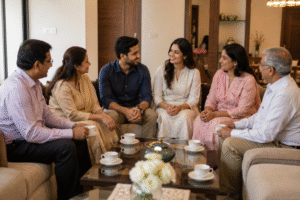
6. Support During Major Relationship Transitions
Relationships often change during important life stages. Engagement, marriage, pregnancy, parenthood, relocation, career changes, financial difficulties, or caring for family members can affect emotional availability and daily routines.
Even positive changes may create stress. A couple who previously had plenty of time together may struggle after taking on new responsibilities. One partner may expect the other to adjust quickly, while the other may need more time and support.
A Relationship Therapist in Dwarka can help couples discuss expectations before resentment grows. Sessions may focus on communication, role adjustments, emotional support, time management, and practical planning.
Topics to discuss during a transition
-
How will responsibilities be divided?
-
What support does each person need?
-
How will personal time be protected?
-
What financial changes should be expected?
-
How will disagreements be handled?
-
What boundaries should be communicated to relatives?
-
How can partners maintain emotional closeness?
Relationship Therapist in Dwarka, Discussing these questions early may reduce confusion. Couples do not need to wait until a major disagreement becomes serious before seeking guidance.
7. Better Self-Awareness and Personal Growth
Relationship therapy is not only about changing a partner’s behaviour. It can also help individuals understand their own emotions, expectations, fears, and responses.
A Relationship Therapist in Dwarka may encourage clients to explore questions such as:
-
Why do I react strongly to certain situations?
-
Do I avoid difficult conversations?
-
Do I expect my partner to understand without explanation?
-
How do I respond when I feel rejected?
-
Am I communicating my needs clearly?
-
Do past experiences influence my current relationship?
-
What boundaries are important to me?
-
Which behaviours can I take responsibility for?
Self-awareness can support more thoughtful choices. For example, a person who notices that they become defensive whenever feedback is offered may learn to pause and ask for clarification instead of immediately responding with anger.
Relationship Therapist in Dwarka, Personal growth does not mean accepting blame for everything. It means understanding one’s own role while also recognizing the responsibility and choices of the other person.
How Relationship Therapy Usually Works
The process may differ depending on the therapist, the concerns involved, and whether sessions are individual or joint. However, many counselling processes include several common stages.
Initial discussion
The first session usually provides an opportunity to explain why support is being sought. The therapist may ask about the relationship history, current concerns, communication patterns, and goals for therapy.
Both partners may have different views of the problem. One may focus on emotional distance, while the other may focus on frequent arguments. The therapist can help organize these concerns without assuming that one perspective is automatically correct.
Identifying patterns
The therapist may help identify repeated cycles. For example, one partner may criticize when feeling ignored, while the other withdraws when feeling criticized. Understanding the cycle can help both people see how their responses influence the next stage of the conflict.
Setting goals
Goals should be realistic and specific. Examples include:
-
Communicating without shouting
-
Discussing finances calmly
-
Rebuilding trust after a difficult event
-
Creating boundaries with relatives
-
Improving emotional connection
-
Deciding whether to continue the relationship
-
Preparing for marriage or parenthood
Practising new responses
Therapy may include communication exercises, reflective questions, role-play, homework, or discussions to practise between sessions. Progress may involve small changes rather than dramatic transformations.
What to Expect During a Counselling Session
When visiting a Relationship Therapist in Dwarka, clients may feel nervous before the first appointment. It is normal to be unsure about what to say or worry that the therapist may judge one partner.
A session generally provides time to discuss concerns, understand different viewpoints, and identify possible next steps. The therapist may ask each person to speak without interruption, clarify statements, or describe a recent disagreement.
Relationship Therapist in Dwarka, Clients should not feel pressured to reveal everything immediately. Trust and comfort may develop gradually. It is reasonable to ask about confidentiality, session structure, cancellation policies, communication between appointments, and the expected length of the counselling process.
Therapy works best when participants are honest and willing to reflect. However, each person has the right to ask questions and understand the purpose of any exercise or recommendation.

Online or In-Person Relationship Therapy?
Both online and in-person counselling may be useful, depending on the situation and the therapist’s services.
Benefits of in-person sessions
In-person appointments may provide:
-
A dedicated space away from household distractions
-
Easier separation between home life and therapy time
-
A structured environment for difficult discussions
-
Convenient access for people living nearby
Benefits of online sessions
Online counselling may be helpful for people who:
-
Have demanding work schedules
-
Live far from the clinic
-
Prefer discussing concerns from home
-
Need follow-up sessions with greater flexibility
-
Feel more comfortable beginning through video consultation
When selecting a Relationship Therapist in Dwarka, ask whether online sessions are available and what technology or privacy arrangements are required. Both partners should ideally attend from a private location where they can speak freely.
Online sessions may not be appropriate when there is immediate danger, severe emotional distress requiring urgent assessment, or a need for in-person support.
How to Choose a Suitable Relationship Therapist
Relationship Therapist in Dwarka, Finding the right professional involves more than selecting the first search result. A suitable Relationship Therapist in Dwarka should be selected according to your needs, comfort, and practical circumstances.
Consider the following factors:
Professional qualifications and experience
Review the therapist’s stated qualifications, professional registration where applicable, training, and areas of practice. Look for information relevant to relationship counselling, couples therapy, family concerns, or individual emotional support.
Therapeutic approach
Different professionals may use different methods. Ask how the therapist generally works with couples and whether the approach involves communication exercises, emotional awareness, behavioural strategies, or another framework.
Neutrality and respect
Both partners should feel that the therapist is listening fairly. The professional should not encourage blame, humiliation, or pressure to make an immediate decision.
Privacy and confidentiality
Ask how personal information is protected and who may access session records. Discuss whether both partners can speak privately when necessary.
Accessibility
Consider location, appointment timing, online options, travel requirements, and follow-up convenience. Consistency may be easier when sessions fit realistically into your schedule.
Comfort and communication
A therapist may have relevant qualifications, but the working relationship also matters. If you feel misunderstood or uncomfortable, discuss the concern openly or consider whether another professional may be more suitable.
Questions to Ask Before Booking an Appointment
Before choosing a Relationship Therapist in Dwarka, you can ask:
-
Do you provide individual sessions, couples sessions, or both?
-
What types of relationship concerns do you commonly address?
-
What is your professional qualification and training?
-
How are confidentiality and privacy handled?
-
Are online consultations available?
-
How long is a typical session?
-
How are therapy goals decided?
-
Will both partners have opportunities to speak?
-
What happens if one partner does not want to attend?
-
How are urgent concerns handled outside appointment hours?
These questions can help you understand whether the professional’s services match your expectations.
Practical Relationship Improvement Strategies
Professional counselling can be supported by small daily actions. These habits do not replace therapy, but they may help partners practise healthier communication.
Schedule regular check-ins
Set aside time to discuss the relationship without focusing only on complaints. Each person can share one thing they appreciated and one issue they would like to discuss.
Avoid difficult conversations during peak anger
If emotions are intense, agree to pause and return to the topic at a specific time. A break should not become a way to punish or permanently avoid the discussion.
Be specific about needs
Instead of saying, “You do not care,” explain the behaviour that creates concern. For example, “I would like us to spend thirty minutes together without distractions.”
Appreciate effort
Acknowledging small contributions can reduce the feeling that only mistakes are noticed. Appreciation should be genuine and specific.
Maintain personal boundaries
Healthy relationships allow room for individual interests, friendships, rest, and personal decisions. Closeness does not require giving up every personal boundary.
Review expectations
Partners may assume that the other person understands their preferences. Discuss expectations about money, family, household work, privacy, affection, and future plans instead of relying on assumptions.

When Professional Support May Be Necessary
Relationship concerns may benefit from professional guidance when they are persistent, emotionally exhausting, or difficult to discuss without repeated conflict. Consider seeking support if:
-
The same argument happens repeatedly
-
Communication has almost stopped
-
Trust concerns remain unresolved
-
One or both partners feel emotionally alone
-
Conflict affects sleep, work, or family life
-
Important decisions cannot be discussed calmly
-
Resentment continues to grow
-
One partner feels pressured or unheard
-
You are unsure whether to continue the relationship
Relationship Therapist in Dwarka, If there is physical violence, threats, coercive control, stalking, or fear for personal safety, relationship counselling may not be the first or safest step. Seek appropriate professional, legal, emergency, or domestic violence support and prioritize immediate safety. Joint therapy may be unsuitable in situations where one person cannot speak freely or may face retaliation.
Common Misconceptions About Relationship Therapy
“Therapy is only for couples who are separating.”
Many people seek counselling while they still want to improve their relationship. Support may be useful before problems become severe.
“The therapist will decide who is right.”
A responsible therapist generally helps people understand concerns and patterns rather than acting as a judge. The goal is to support informed and respectful decisions.
“Both partners must attend every session.”
Joint participation can be helpful, but individual sessions may also be appropriate depending on the circumstances and professional guidance.
“One session will solve everything.”
Some concerns may be addressed quickly, while deeper patterns require time and practice. Progress depends on many factors, including participation, consistency, safety, and the nature of the problem.
“Therapy means admitting that the relationship has failed.”
Seeking help can simply mean that the people involved want greater clarity, better communication, or support during a difficult stage.
Frequently Asked Questions
1. How can I choose a suitable Relationship Therapist in Dwarka?
Review the professional’s qualifications, experience, counselling approach, privacy practices, appointment availability, and online or in-person options. It is also important to choose someone whose communication style feels respectful and comfortable for the people attending.
2. Can relationship therapy help with frequent arguments?
Therapy may help partners understand recurring conflict patterns, identify triggers, improve listening, and practise more constructive ways to express concerns. It cannot guarantee that disagreements will disappear, but it may support healthier ways of handling them.
3. Should both partners attend relationship counselling?
Both partners may benefit from attending together, but this is not always required. Individual sessions may be useful when one partner is unavailable, uncertain, or needs private support. The appropriate format depends on the situation.
4. Is relationship counselling useful before marriage?
Premarital counselling may help couples discuss expectations about finances, family involvement, communication, responsibilities, parenting, personal space, and long-term plans. These conversations may reduce misunderstandings and encourage more informed decisions.
5. How long does relationship therapy take?
There is no fixed timeline for every couple. The duration may depend on the concerns, goals, level of participation, emotional safety, and progress during sessions. Ask the therapist how progress will be reviewed.
6. Can online relationship therapy be effective?
Online sessions may be useful for communication guidance, follow-up discussions, and couples who cannot easily travel. Both partners should have privacy and a reliable connection. Some concerns may still require in-person or emergency support.
7. What if my partner refuses to attend?
You can still seek individual counselling to understand your feelings, communication patterns, boundaries, and available choices. A professional can help you explore what steps are appropriate without forcing your partner to participate.
Conclusion
Relationship Therapist in Dwarka, Relationships require communication, understanding, flexibility, and ongoing attention. When partners experience repeated arguments, emotional distance, trust concerns, family pressure, or uncertainty about the future, professional support may provide a structured space to understand the situation.
Choosing a Relationship Therapist in Dwarka involves reviewing qualifications, counselling methods, privacy, accessibility, session formats, and personal comfort. The right professional can help individuals and couples explore their concerns, identify repeated patterns, communicate more clearly, and consider practical next steps.
Relationship therapy does not promise a perfect relationship or guarantee a particular outcome. Instead, it can support awareness, respectful conversation, healthier boundaries, and informed decisions. If relationship difficulties are affecting daily life or emotional well-being, seeking appropriate help can be a meaningful step toward greater clarity and healthier connection.
Contact Information

Dr. Jyoti S Sharma
Certified Psychologist & Music Therapist
15+ Years of Experience
Worked with BLK-Max & Medeor Hospitals
Website: cultoccult.com