


Marriage brings two people together, but maintaining a healthy relationship requires communication, understanding, patience, and a willingness to grow together. Over time, work pressure, family responsibilities, financial decisions, parenting challenges, and differences in expectations can create tension between partners. Even couples who care deeply about each other may struggle to resolve disagreements without hurting one another.
A Marriage Counselor in Dwarka can provide a structured and supportive space where couples discuss their concerns, understand recurring conflicts, and explore healthier ways to communicate. Counselling is not only for marriages facing the possibility of separation. It can also help partners who want to rebuild trust, improve emotional intimacy, manage disagreements, or strengthen an already stable relationship.
Many couples postpone seeking help because they believe relationship problems should remain private or that asking for professional guidance indicates failure. In reality, recognising a problem and exploring appropriate support can be a thoughtful step towards improving a relationship.
Choosing a suitable professional involves considering qualifications, experience, privacy, accessibility, and the type of counselling offered. This guide explains how marriage counselling works, when couples may benefit from it, what to expect during sessions, and how to choose support that suits their needs.
What Is Marriage Counselling?
Marriage counselling is a professional process that helps married partners understand relationship difficulties, improve communication, and work towards realistic shared goals. Sessions may focus on emotional connection, disagreements, trust, expectations, family responsibilities, intimacy, or decisions about the future.
Marriage Counselor in Dwarka, counsellor typically helps partners explore how they communicate, respond to stress, and interpret each other’s behaviour. Instead of focusing exclusively on who is right or wrong, the process examines patterns that may be keeping the conflict going.
For example, one partner may become quiet during an argument because they feel overwhelmed, while the other interprets the silence as indifference and continues asking questions. Both people may feel unheard, even though they are reacting differently to the same situation. Counselling can help them understand this cycle and practise a more constructive response.
A Marriage Counselor in Dwarka may work with couples at different stages of marriage, depending on their training and professional scope. Some couples seek support before a major decision, while others attend after months or years of recurring conflict.
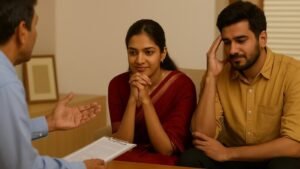
7 Positive Ways a Marriage Counselor in Dwarka Can Support Couples
Every relationship is different, so the benefits of counselling depend on the concerns involved, each partner’s participation, and the suitability of the professional approach.
1. Improving Communication Between Partners
Communication difficulties often begin with small misunderstandings. A discussion about household responsibilities may turn into an argument about respect, appreciation, or fairness because the underlying concern has not been clearly expressed.
Marriage Counselor in Dwarka, Marriage counselling can help partners recognise unhelpful communication habits, such as interrupting, making assumptions, using absolute statements, or bringing up several past disagreements at once.
2. Rebuilding Trust After Difficult Experiences
Trust can be affected by dishonesty, broken promises, secrecy, or repeated disappointments. When trust has been damaged, the affected partner may struggle with uncertainty, while the other may feel frustrated that the issue continues to return.
A Marriage Counselor in Dwarka may help couples understand the impact of the incident, discuss accountability, and identify what rebuilding trust would require in practical terms.
Depending on the circumstances, this may involve honest conversations, clearer boundaries, consistent behaviour, and realistic agreements about transparency. Trust usually develops through repeated actions rather than promises alone.
3. Managing Repeated Arguments
Some couples argue about different subjects but repeatedly experience the same underlying conflict. Discussions about money, household tasks, or time spent with family may reflect deeper concerns about fairness, independence, appreciation, or responsibility.
Marriage Counselor in Dwarka, Counselling can help identify these recurring patterns and explore how each person contributes to the interaction. This is not about assigning equal blame in every situation; it is about understanding what is happening and identifying changes that are safe and realistic.
4. Restoring Emotional Connection
Emotional distance may develop gradually when couples become occupied with work, childcare, financial pressure, or unresolved disagreements. Partners may continue managing daily responsibilities together while feeling less connected personally.
Marriage Counselor in Dwarka, Counselling may help couples discuss what makes them feel valued, supported, and understood. It can also encourage them to identify small opportunities for meaningful connection, such as sharing daily experiences, spending time together without distractions, or expressing appreciation.
5. Navigating Family and Parenting Pressures
In some marriages, disagreements arise around relationships with extended family, parenting decisions, cultural expectations, or the division of responsibilities. These issues can become particularly challenging when partners feel caught between family members and their spouse.
Marriage Counselor in Dwarka, A counsellor may help couples clarify their shared priorities, understand each other’s concerns, and establish respectful boundaries.
6. Discussing Intimacy and Personal Needs
Physical intimacy and emotional closeness can be affected by stress, health concerns, unresolved resentment, changes in routine, or differences in desire. Some partners find it difficult to discuss these matters because they fear embarrassment, rejection, or judgment.
Marriage counselling can offer a respectful setting for discussing expectations, consent, emotional needs, and the effect of relationship conflict on intimacy.
7. Making Informed Decisions About the Future
Not every couple begins counselling with the same goal. Some want to improve their marriage, while others are uncertain whether continuing the relationship is right for them.
A Marriage Counselor in Dwarka may help partners explore their concerns, clarify their values, and consider possible next steps without imposing a particular outcome.

Common Marriage Problems That May Benefit From Counselling
Relationship challenges can arise for many reasons. Identifying the main concern can help couples decide what kind of support they need.
Communication and Misunderstandings
Partners may interpret the same conversation differently because of past experiences, personal expectations, or different ways of expressing emotions. One person may prefer to resolve an issue immediately, while the other needs time to think.
Marriage Counselor in Dwarka, Learning to recognise these differences can reduce unnecessary misunderstandings. A counsellor may help couples establish a communication style that allows both partners to speak and be heard.
Financial Disagreements
Money can represent security, independence, family responsibility, or personal freedom. Differences in spending habits, savings goals, debt, and financial support for relatives can therefore create significant tension.
Marriage Counselor in Dwarka, Couples may benefit from discussing financial priorities openly, reviewing shared obligations, and agreeing on practical decision-making rules. Counselling can help address the emotional aspects of these discussions, while financial planning may require separate professional advice.
Lack of Quality Time
Busy schedules can reduce opportunities for meaningful interaction. Couples may communicate mainly about errands, bills, childcare, and household tasks rather than their feelings or interests.
Marriage Counselor in Dwarka, Small, consistent changes may help, such as setting aside time for a conversation, sharing an activity, or agreeing on periods without phones. Counselling can help partners understand what quality time means to each person.
Unresolved Resentment
Repeated disappointments may lead one or both partners to hold on to past grievances. Even a minor disagreement can then trigger a much larger argument.
Working through resentment often requires acknowledging the impact of previous events, taking responsibility where appropriate, and discussing what needs to change. Forgiveness should not be demanded, and it does not remove the need for accountability or safety.
How Marriage Counselling Sessions Usually Work
The process varies depending on the counsellor’s training, the couple’s circumstances, and their goals. Understanding the general stages can make the first appointment feel less uncertain.
The Initial Consultation
During an initial session, the professional may ask what brought the couple to counselling, how long the difficulties have been present, and what each partner hopes to achieve.
Both partners should have an opportunity to explain their perspectives. It is normal for them to disagree about the cause of a problem or what needs to change.
Identifying Shared Goals
After discussing the concerns, the counsellor may help the couple identify practical goals. These could include reducing the intensity of arguments, improving listening, rebuilding trust, or making a difficult decision.
Specific goals are generally more useful than broad expectations such as “We want everything to become normal.” A more practical goal might be to discuss disagreements without insults and agree on how to pause and resume difficult conversations.
Learning and Practising New Skills
Sessions may involve guided conversations, reflection, communication exercises, or strategies for managing emotional reactions. Some professionals may suggest activities between sessions to help couples practise what they have discussed.
For instance, partners may be encouraged to take turns explaining a concern while the other listens and summarises what they heard before responding. The exercise is intended to improve understanding, not to force agreement.
Reviewing Progress
Progress may involve fewer repeated arguments, more respectful conversations, clearer boundaries, or a better understanding of each other’s needs. It may also involve recognising that certain differences remain unresolved and require a decision.
A Marriage Counselor in Dwarka should be willing to discuss whether the approach is meeting the couple’s needs. If progress feels limited, the couple can raise concerns, review their goals, or ask whether a different form of support would be more suitable.
How to Choose the Right Marriage Counselor in Dwarka
Choosing a counsellor is an important decision because couples may discuss sensitive personal experiences. Consider the following factors before making an appointment.
Check Qualifications and Relevant Experience
Ask about the professional’s education, training, relevant registration where applicable, and experience with relationship concerns. Professional titles can describe different levels of training and responsibilities, so confirm that the provider is appropriately qualified for the service offered.
If mental health symptoms, trauma, or other specialised concerns are involved, ask whether the professional has relevant experience and whether additional support may be needed.
Assess Communication and Comfort
Both partners should have a reasonable opportunity to speak without feeling mocked, dismissed, or pressured. A good professional relationship involves respectful communication, clear explanations, and realistic expectations.
You do not need to agree with every observation the counsellor makes. However, you should feel able to ask questions and discuss concerns about the process.
Consider Location and Accessibility
Dwarka covers several residential sectors, and practical travel arrangements may affect how easily couples attend sessions. Consider distance from home or work, public transport, parking where relevant, appointment availability, and the privacy of the consultation setting.
Marriage Counselor in Dwarka, Convenience matters because repeated travel difficulties can make it harder to maintain appointments. However, location alone should not determine your choice; professional suitability and safety remain important.
Understand Fees and Policies
Before starting, ask about the cost of sessions, payment arrangements, cancellation rules, expected duration, and whether the counsellor recommends individual or joint meetings as part of the process.
Do not assume that the most expensive option is automatically the best. Look for transparent policies, appropriate qualifications, and a service that fits your circumstances.

Online vs. In-Person Marriage Counselling
Both online and in-person sessions may be suitable for some couples. The best format depends on the concerns being addressed, the professional’s recommendations, and whether the couple can participate privately and safely.
In-person counselling offers face-to-face interaction in a dedicated setting. Some people find it easier to focus when they are away from household responsibilities, while others prefer meeting a professional directly.
Online counselling may be more convenient for couples with demanding schedules, long commutes, or different work locations. It requires reliable internet access and a private space where both people can speak openly without being overheard.
Practical Ways to Improve Your Marriage Between Sessions
Professional support can be complemented by everyday habits that encourage respectful communication. These steps do not replace counselling when it is needed, but they may help couples practise healthier interactions.
- Use specific language: Explain the behaviour that concerns you rather than making broad accusations about your partner’s character.
- Listen before responding: Allow your partner to finish speaking and summarise what you understood before sharing your view.
- Choose a suitable time: Avoid starting a difficult discussion when either person is exhausted, rushing, or already highly upset.
- Take breaks responsibly: If emotions become overwhelming, agree to pause and return to the conversation at a specific time rather than using silence as punishment.
- Recognise positive actions: Acknowledge everyday efforts, even when larger concerns remain unresolved.
- Discuss responsibilities clearly: Agree on practical arrangements for household work, finances, parenting, and family commitments.
- Respect boundaries: Neither partner should be forced to disclose information, accept unwanted intimacy, or give up personal safety to prove commitment.
Couples can also ask themselves a few useful questions: What issue keeps returning? What do I need my partner to understand? What can I change in my own behaviour? What would a respectful solution look like?
A Marriage Counselor in Dwarka can help partners adapt these strategies to their relationship and explore why certain approaches may be difficult to maintain.

Frequently Asked Questions
1. When should we consult a Marriage Counselor in Dwarka?
Consider counselling when communication repeatedly breaks down, trust has been damaged, disagreements remain unresolved, or emotional distance affects your relationship. Couples can also seek guidance before major life changes or when they want to strengthen an otherwise stable marriage.
2. Do both partners need to attend every session?
Joint sessions are common in marriage counselling, but the arrangement depends on the professional’s approach and the couple’s circumstances. Some providers may recommend separate meetings for specific reasons. Ask how individual conversations are handled and what confidentiality rules apply before beginning.
3. How long does marriage counselling take?
There is no standard duration that suits every couple. Some concerns may be addressed through a shorter course of sessions, while others require more time. Goals, the complexity of the issues, participation, and progress can all influence the process.
4. Can counselling help after a breach of trust?
Counselling may help partners discuss the impact of a breach, clarify accountability, and explore whether rebuilding trust is possible. Progress depends on the circumstances and the willingness of the people involved. Reconciliation should never be treated as a guaranteed outcome or an obligation.
5. Is online marriage counselling effective?
Online sessions may be useful when both partners have a private setting, reliable technology, and concerns suitable for remote support. The professional can help determine whether this format fits the couple’s needs. Situations involving intimidation, violence, or immediate safety risks may require different support.
6. What should we ask before choosing a counsellor?
Ask about qualifications, relationship counselling experience, methods used, confidentiality, fees, session duration, and cancellation policies. You can also ask how the professional manages disagreements during sessions and what happens if one or both partners feel the approach is not helping.
Conclusion
Marriage difficulties can be painful, particularly when partners feel unheard, misunderstood, or uncertain about the future. However, recurring disagreements do not always mean that a relationship cannot improve. Understanding communication patterns, discussing expectations, setting healthy boundaries, and taking responsibility for individual actions may create opportunities for positive change.
Choosing a Marriage Counselor in Dwarka involves more than finding a convenient appointment. Consider the professional’s qualifications, relevant experience, communication style, confidentiality practices, accessibility, and approach to your specific concerns.
Contact Information

Dr. Jyoti S Sharma
Certified Psychologist & Music Therapist
15+ Years of Experience
Worked with BLK-Max & Medeor Hospitals
Website: cultoccult.com